Outdoors
The Bluest EyeOutdoors is not merely the space beyond a house but the condition of being left with no place to go. The Breedloves’ displacement gives the word its immediate force, while the MacTeer children’s reflections turn it into a measure of vulnerability: shelter means more than a roof, and its loss can feel final.
Definition and Distinction
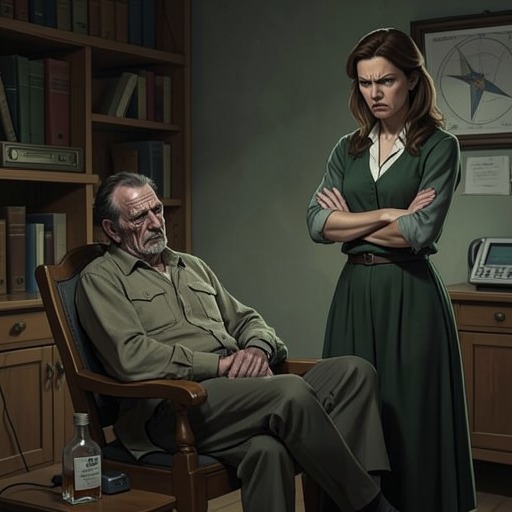
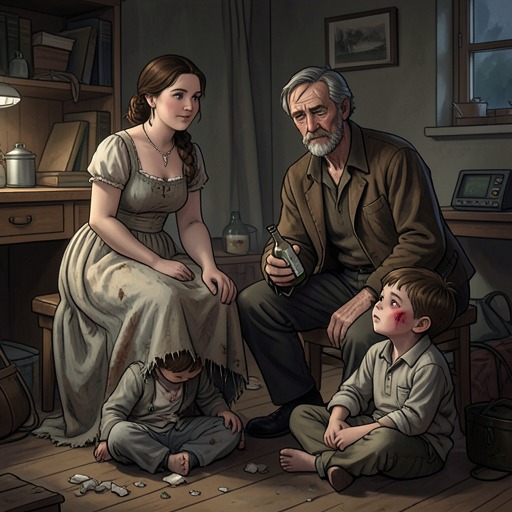
The children learn that the Breedloves are outdoors after old Dog Breedlove burns their house and attacks his wife. They describe the result plainly: everybody is outdoors. The incident makes the term concrete, but their account distinguishes two states that might otherwise sound alike. To be put out is to leave one place and go somewhere else; to be outdoors is to have no elsewhere available. The difference is subtle in wording and absolute in consequence.
That distinction makes Outdoors more than a temporary inconvenience. The children call it an irrevocable physical fact, one that defines and complements their metaphysical condition. Their phrasing links the material fact of having nowhere to go with a broader sense of exclusion: deprivation is not only about the missing house but about the place a person is permitted to occupy in the world.
A Threat Inside the Home
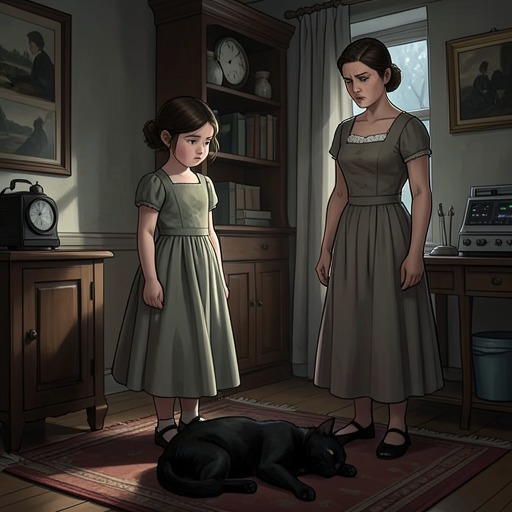
For the MacTeer children, Outdoors is frightening partly because it is never far from ordinary life. The danger surfaces frequently in their thoughts and disciplines behavior. Excess is curtailed by the threat: eating too much, for instance, can invite a warning that someone may be sent outdoors. The possibility of losing shelter thus reaches into domestic routines before anyone is actually expelled.
The fear is sharpened by the children’s judgment that putting oneself outdoors through slackness, or putting one’s own kin outdoors through heartlessness, is criminal. Their formulation makes shelter a responsibility as well as a possession. A household can be poor and still understand that kin must not be abandoned to a condition from which there is no destination or reliable return.
Property, Security, and Belonging
Knowing that Outdoors exists breeds in the children a hunger for property and ownership. They name the tangible signs of secure possession: a yard, a porch, a grape arbor. These are not presented as luxuries detached from fear; their value lies in the firm claim to a place that the word Outdoors threatens to erase.
The contrast extends to people with property. The children observe that Black people who own homes spend their time discussing and worrying about their property. Their attention to its upkeep and security reveals how possession can answer a particular vulnerability, while also showing that ownership does not make anxiety disappear. A yard or porch marks a boundary against exposure, but the need to guard that boundary remains part of life under the threat of losing it.
Narrative and Thematic Significance
The concept enters the children’s account through a specific family crisis, then widens into a recurring condition. The Breedloves’ burned house supplies the immediate example; the MacTeers’ fear of being expelled shows how the threat travels beyond that household, shaping discipline and the desire to own a place. The movement from one family’s displacement to the children’s general reflections lets a concrete event disclose a shared insecurity without treating homelessness as an abstraction.
The children’s stark claim that Outdoors is here to stay gives the condition the force of death: the comparison is not that the two are identical in circumstance, but that both are imagined as fixed states that do not change. Outdoors therefore names more than exposure to weather. It is the feared endpoint of dispossession, a physical exclusion that can seem to confirm a deeper exclusion from secure belonging. Against it, the remembered yard, porch, and grape arbor stand as modest but charged forms of possession: evidence that a place to remain can matter as much as anything inside the house.